
Specify and size Uninterruptible Power Supply systems to ensure your critical loads remain powered during grid disturbances — with the right capacity, backup time, and redundancy architecture for your application.
An undersized UPS means critical loads lose power when you need them most. An oversized UPS wastes capital and operates inefficiently. Our UPS sizing study calculates the exact kVA and kWh requirements for your critical load profile, recommends the optimal topology (standby, line-interactive, double-conversion), and specifies battery bank capacity for your required backup duration.
UPS sizing goes beyond adding up the connected load. It involves a detailed analysis of:
Identify all critical loads, classify them by importance, measure or estimate their active (kW) and apparent (kVA) power demands, and account for diversity and simultaneity factors.
Different loads have different power factors. The UPS must be sized for apparent power (kVA), not just real power (kW).
Non-linear loads (VFDs, SMPS) generate harmonics that increase UPS thermal stress. K-factor and derating calculations are essential.
Account for planned load growth, N+1 redundancy requirements, and modularity for phased capacity expansion.
The consequences of improper UPS sizing are costly and potentially catastrophic:
Our UPS sizing methodology follows a systematic engineering approach:
Categorise loads by criticality (Tier I–IV per TIA-942 or EN 50173), determine individual kW/kVA demands, and apply diversity factors.
Recommend optimal topology: double-conversion online for Tier III/IV, line- interactive for Tier I/II, considering efficiency, transfer time, and fault ride- through requirements.
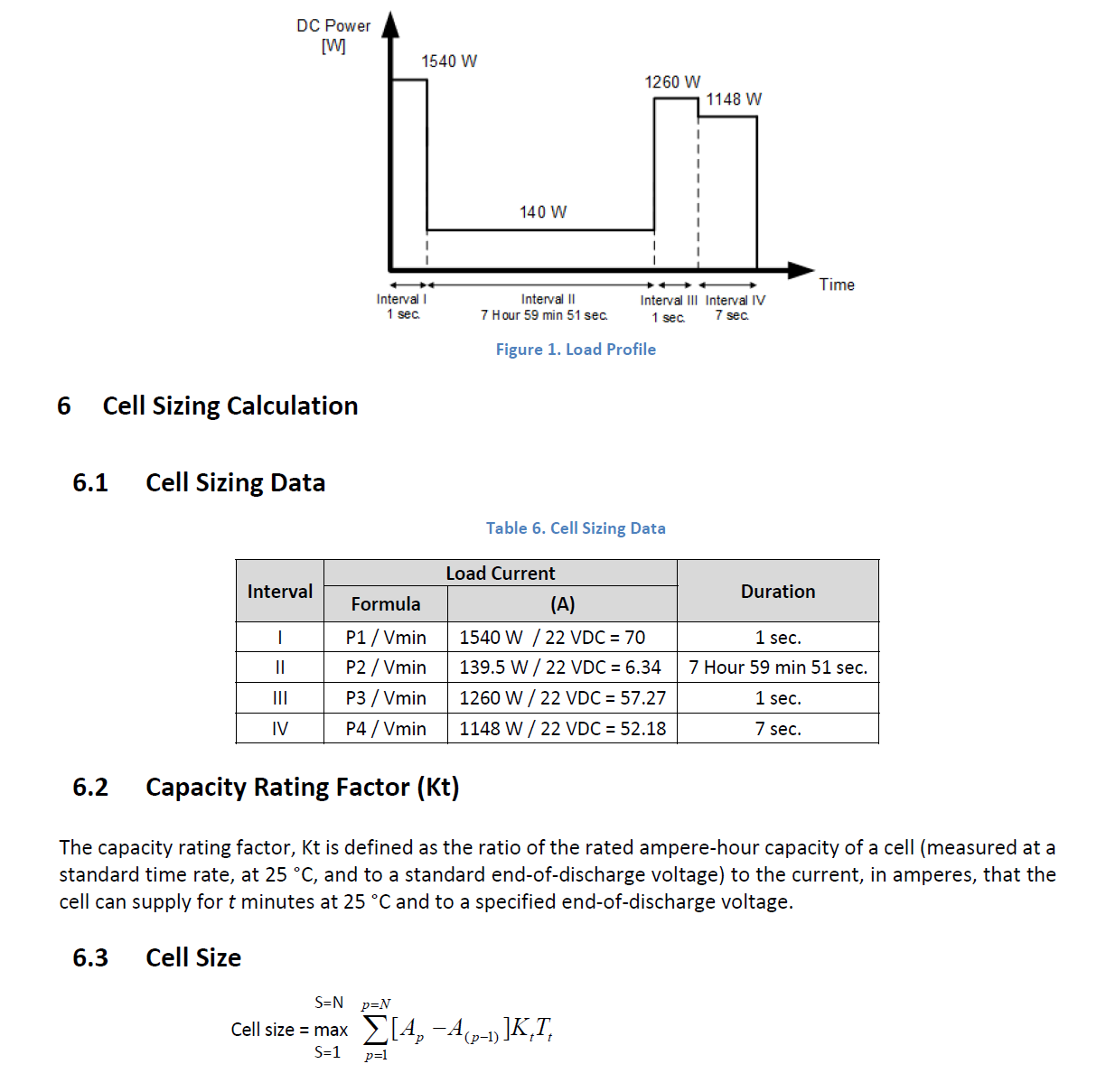
Calculate battery Ah capacity for required backup time (typically 15 min to 8 hours), accounting for end-of-life derating, temperature compensation, and voltage drop in cables.
Evaluate N, N+1, 2N, or 2N+1 redundancy architectures based on load criticality and availability requirements.
Our comprehensive UPS sizing studies include:
We've sized UPS systems for data centres, hospitals, telecom exchanges, and industrial control systems — from 10 kVA rack-mounted units to 2 MW three-phase installations. Our studies consider total cost of ownership including efficiency, maintainability, and expandability, not just upfront capital cost.
Our team of power systems engineers is ready to provide expert guidance, detailed studies, and robust solutions tailored to your specific requirements.