
Identify, model, and mitigate harmonic distortion in your power system to protect equipment, ensure regulatory compliance, and optimise electrical efficiency.
Non-linear loads inject harmonic currents into your electrical system, distorting the pure sine wave and potentially causing equipment malfunction, overheating, and premature failure. Our harmonic analysis identifies the sources, quantifies the distortion, and delivers targeted mitigation strategies.
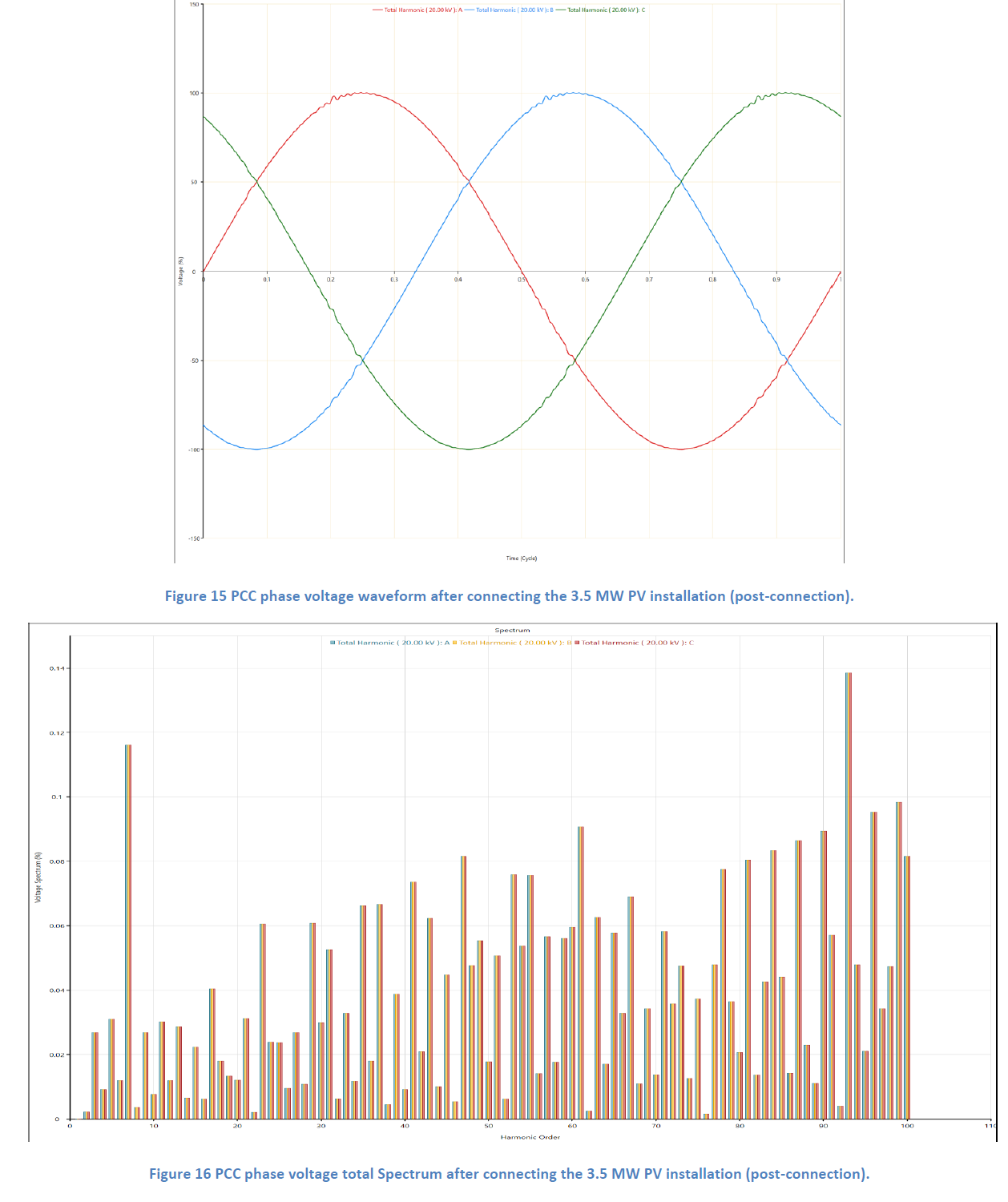
Harmonics are current distortions produced by non-linear loads — equipment that draws current in abrupt pulses rather than a smooth sinusoidal waveform. Common sources include variable frequency drives (VFDs), rectifiers, switch-mode power supplies, LED lighting, arc furnaces, and battery charging systems.
These distorted currents create voltage distortion at integer multiples of the fundamental frequency (50/60 Hz) — the 2nd harmonic at 100/120 Hz, the 5th at 250/300 Hz, the 7th at 350/420 Hz, and so on. The cumulative effect of multiple harmonic frequencies can severely distort the voltage waveform across your entire electrical system.
Prevention is always better than cure when it comes to harmonic distortion. A proper harmonic study:
Our harmonic analysis follows a systematic approach, from source identification to mitigation design:
Categorise harmonic sources: distributed small components (IT equipment, lighting), large randomly varying loads (arc furnaces), and static power converters (VFDs, rectifiers).
Use field theory approaches for accurate harmonic modelling. Model each non-linear load as a current source with specified harmonic spectrum, or as an equivalent impedance where appropriate.
Run time-domain and frequency-domain simulations to assess harmonic voltage distortion at all buses, current distortion at the PCC, and potential resonance conditions.
Design and specify targeted mitigation solutions — passive filters, active harmonic filters, harmonic mitigation transformers, phase multiplication arrangements, or oversizing strategies — based on the specific harmonic profile of your installation.
Harmonic analysis requires deep understanding of both power system theory and the practical behaviour of modern electronic loads. H‑Infinity brings together expertise in power electronics, electromagnetic transient simulation, and hands-on field measurement to deliver comprehensive solutions.
Our approach goes beyond simply identifying problems — we design and specify mitigation solutions that are technically effective, cost-efficient, and designed for long-term reliability. Whether you need a simple passive filter or a sophisticated active harmonic filter with adaptive control, we have the engineering capability to deliver.
Our team of power systems engineers is ready to provide expert guidance, detailed studies, and robust solutions tailored to your specific requirements.