
Calculate motor starting currents, acceleration times, and voltage profiles to ensure your largest motors start successfully without jeopardising system stability or damaging connected equipment.
When large motors start, they draw 5–8 times their rated current. This surge can cause significant voltage dips that affect other equipment, exceed breaker trip thresholds, or simply prevent the motor from reaching operating speed. Our dynamic motor analysis models the complete starting sequence — across-the-line, star-delta, auto-transformer, or soft starter — to verify successful operation.
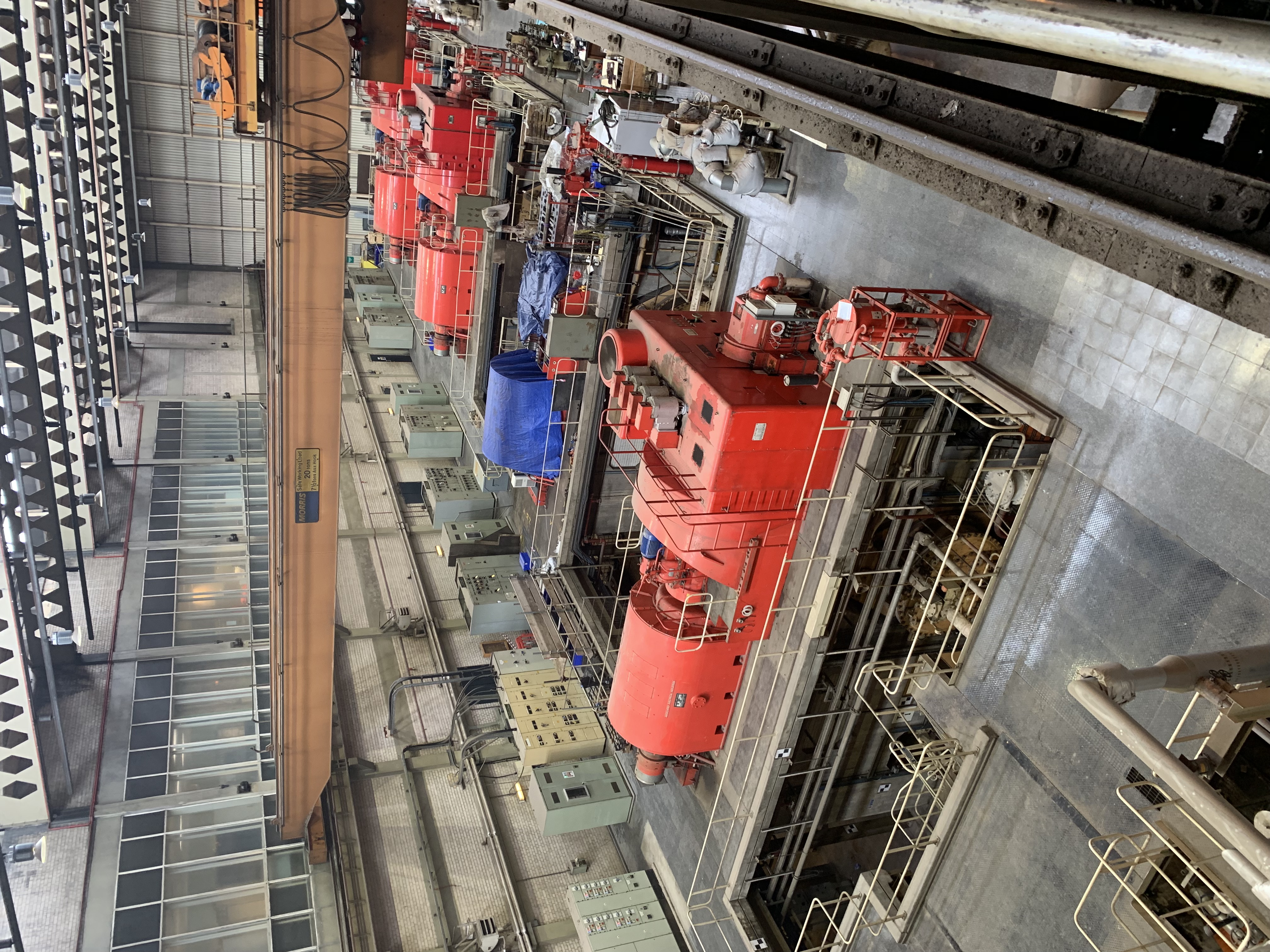
Dynamic motor analysis (also called motor starting study) simulates the transient behaviour of induction and synchronous motors during the starting period — typically 2–10 seconds for large machines. We model:
Breakdown torque, pull-up torque, and pull-down torque characteristics at various voltages and frequencies.
Terminal voltage during starting to verify it stays above minimum thresholds (typically 80–85% of rated).
Time to reach full speed — critical for motors driving fans, pumps, and compressors where extended acceleration can cause overheating.
Locked-rotor and accelerating currents to verify breaker and cable ratings.
Large motor starting is one of the most common causes of system disturbances during commissioning and restart after outages:
Our motor starting analysis uses detailed equivalent circuit models and time-domain simulation:
Extract equivalent circuit parameters from manufacturer data or test results. Model load torque profiles (constant, square, linear) and inertia (GD²).
Evaluate across-the-line, star-delta, auto-transformer, soft-starter, and VFD starting methods to find the optimal trade-off between inrush current and torque.
Simulate the complete acceleration curve (torque vs. speed, current vs. time, voltage vs. time) to identify problematic regions.
For complex plants, model sequential or simultaneous starting of multiple large motors to assess cumulative impact.
Our comprehensive motor starting assessments include:
Motor starting analysis sits at the intersection of electrical design and mechanical engineering. Our team brings experience across oil & gas, mining, water treatment, and commercial construction — understanding the operational constraints that make certain starting methods impractical. We deliver not just simulation results but clear recommendations on starter selection and start sequencing.
Our team of power systems engineers is ready to provide expert guidance, detailed studies, and robust solutions tailored to your specific requirements.